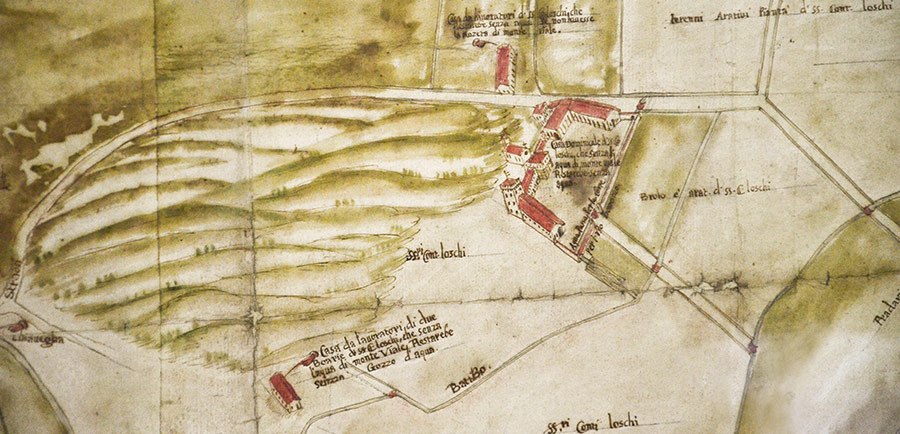
14th century map of Villa Zileri in Monteviale Italy
Arrivederci Paolo
Meaning “farewell” Paolo in English. Paolo was my best friend as a child and that’s the last thing I said to him and my mother and I were driven to a plane early one morning having learned of my grandfather’s death the night before. I left the Alps that morning on a military plane headed to Maxwell Air Force base in Montgomery Alabama never to return.
Apart from the past five years my adult life has been spent in mountains and wilderness in places like Alberta, Wyoming, and Colorado. I gravitated here because I spent my childhood at the edge of one of the most beautiful mountain ranges in the world, the Dolomites of Northern Italy. In a North American kind of way I was returning home to mountains best I could.
To be sure all these years after college I had a day job, but practicing architecture and planning was a way to pay the rent and feed the dog. The hustle was do whatever to be where I wanted to be and spend every free moment exploring wilderness. Wilderness was medicine for an abusive childhood; long weekends and nights camping the antidote to the poison of trauma.
Walking out of the woods after months of camping, traveling by canoe in all kinds of weather, listening to wolves howl, and living out of my sleeping bag changed how I thought.
At 34, I realized I had re-kindled childhood experiences at the foot of the Alps. A sense of peace, wonder about the landscape around me, and being part of something infinitely larger.
My family had lived in a small community called Monteviale in northern Italy. From our home, you could see a glacier year-round at the edge of the Dolomites, where the Ortles Cevedale stood 3,905 meters (12,811 ft) high. I spent endless hours on trails and in alpine meadows with childhood friends. The ecology of the mountains and valleys of the Dolomites are unique, and to say the place was special is an understatement.
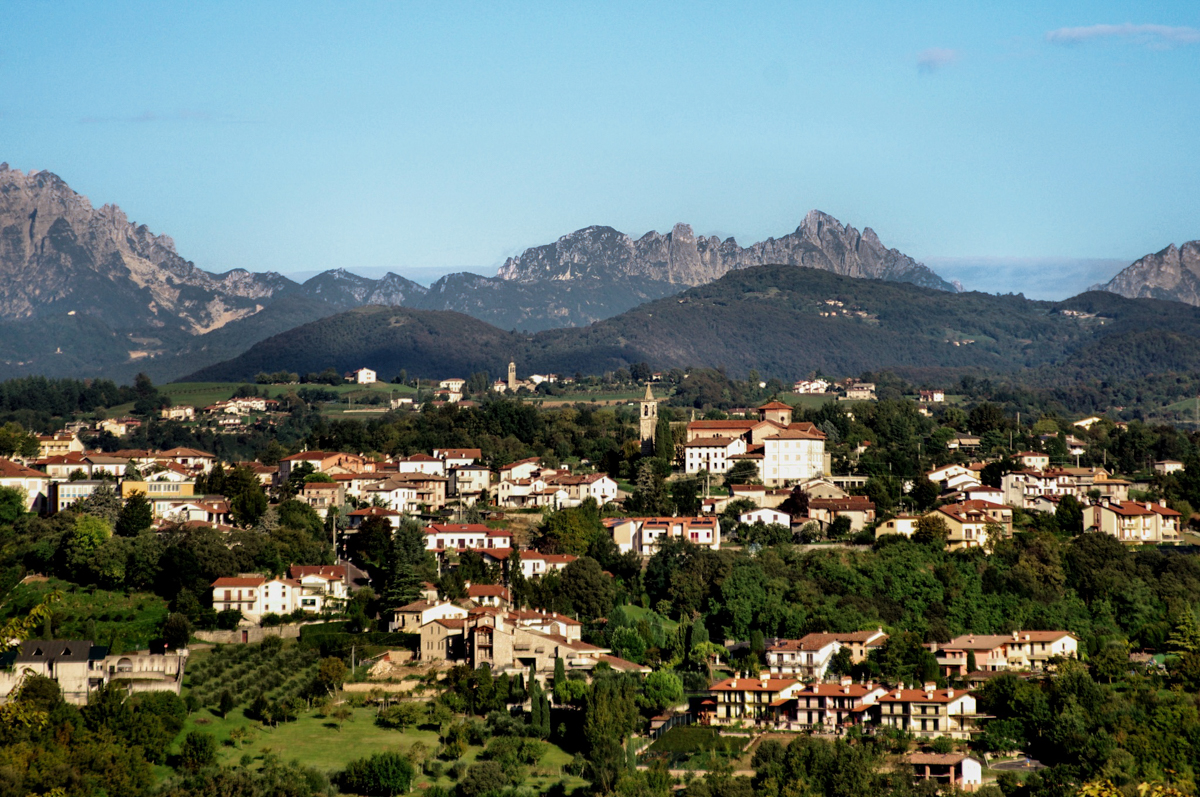
Aerial view of Monteviale
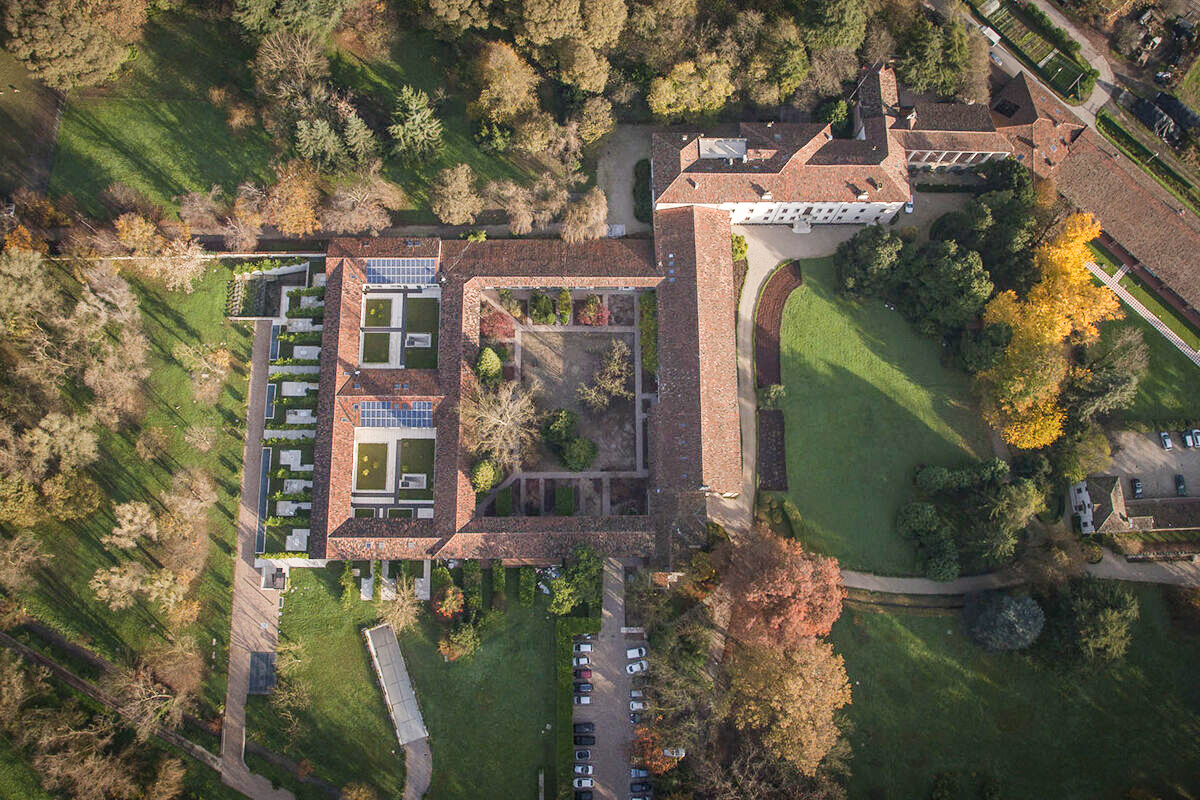
Across the street from where we lived was a lone forested hill surrounded by vineyards and a renaissance-era villa. Villa Zileri was filled with frescoes and paintings from Giambattista Tiepolo. Below is a map of Villa Zileri property surrounded by a huge stone wall. My friends and I would enter the park and play in a forest of ancient oaks inside its stone walls. Some oaks are up to 7 meters (21 feet) in circumference, and old-growth sycamore trees are 15 feet around. The forest is hundreds of years old. Technically this is one of the famous Berici hills, the edge of the villa built where the land suddenly went flat, and vineyards stretched 20 miles to nearby Vicenza. This villa and its forest date back to 1436, when it was acquired from the San Felice monks who started living here when Christianity developed during the Roman empire. At the center and on the top of a hill was the chapel of San Francisco with ceilings decorated with sea shells. It was difficult to come back to rural Barbour county Alabama as a teenager, where there were no art classes, mountains, and local culture consisted of Friday night football games. I did what I could to fit in, met some good friends I still am close with, started deer hunting, and got a job at the Piggly Wiggly bagging groceries. Entertainment consisted of riding around the town and parking at the courthouse, and drinking beer. There was literally nothing else to do. Contrasted with outdoor concerts, wine and art festivals and a hundred days of skiing a year it was difficult to accept. I've spent most of the past four decades in this country except for a brief time living in the Ukraine and Canada. At the age of 57, I realize rural Alabama is not where I should be, and no longer have family ties to keep me here. So I'm selling my farm and plan to pursue documentary photography full-time. Approaching 60, I've realized it's now or never to live my passion, and after years of saving and living frugally, borrowing money for real estate projects paying my entrepreneurial dues, I've earned that right.I credit living next to Villa Zilleri for being what inspired me to become an architect, which led me to photography. The same goes for my graduate degree in landscape architecture. The whole Veneto region of Italy, especially northwest of Vicenza, along with the works of Andre Palladio, is gorgeous. But the 14th-century villa I lived next to next to was especially unique.
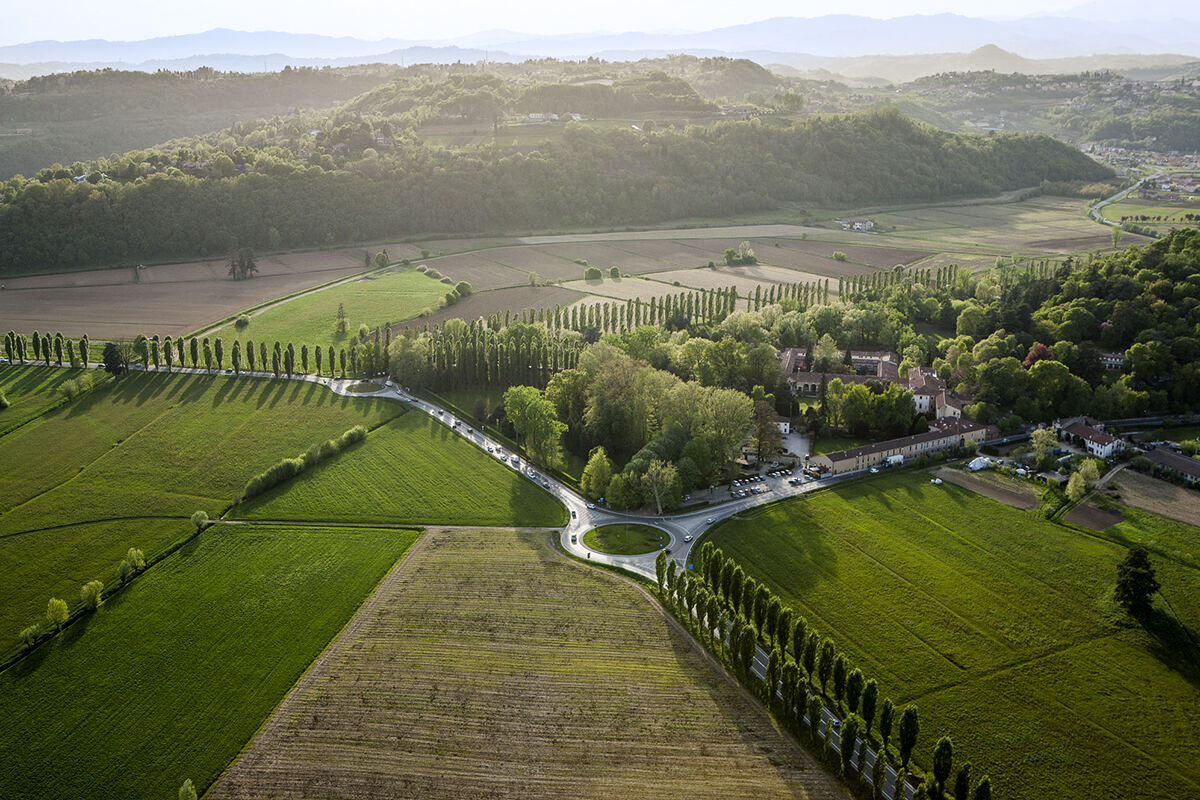
View from the southeast.Our home was in the right corner
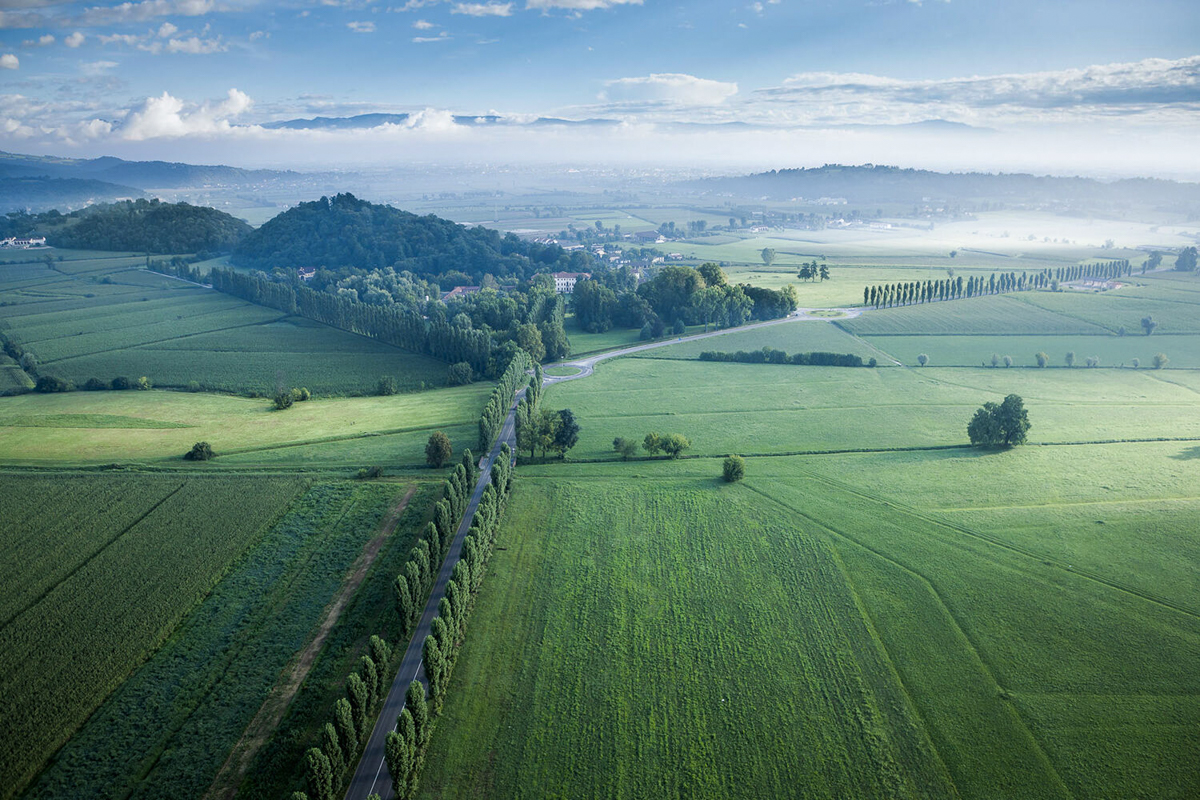
View from the southwest
In its design, the Loschi family rejected the formal order of Palladio and chose Francesco Muttoni and then Giuseppe Marchi, who designed in a sensitive manner letting the shape of the hills and forests drive the placement and shape of the buildings and interior spaces. After it’s construction they hired Gianbattista Tiepolo to paint frescos on the walls and ceilings. The results are spectacular.
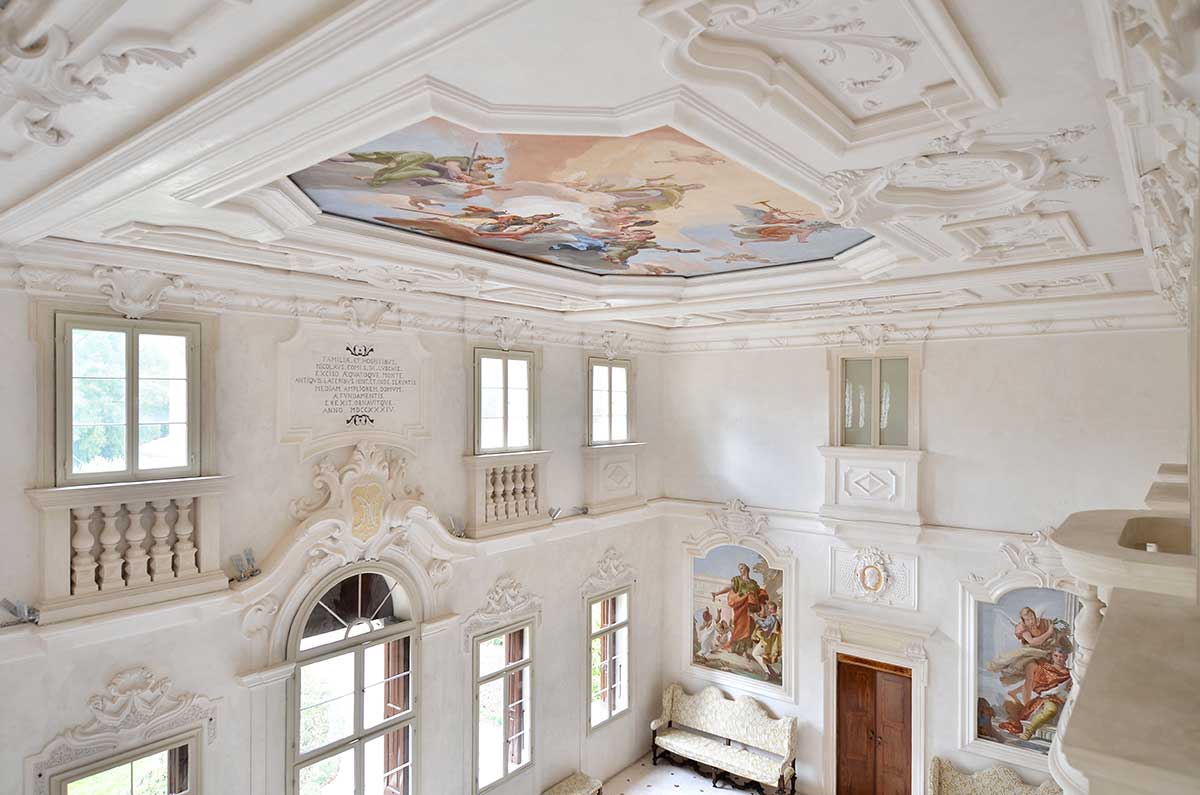
Interior of Villa Zileri with Tiepolo's frescoes painted on the ceiling and walls
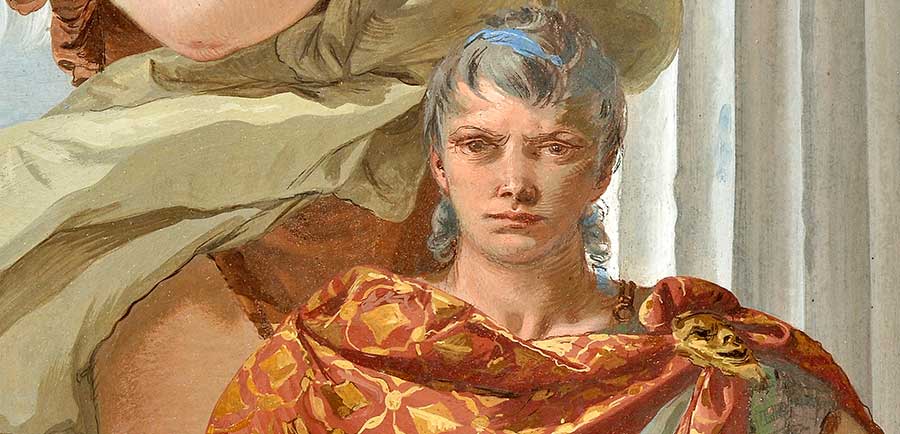
Close-up views of Tiepolo's paintings

In this part of Italy, as in America, where civics class was mandatory, art was considered mandatory and equally important than knowing about the government. The Italian theory was governments come and go, but art and the beauty endure. Culture and respecting each other are more important than politics.
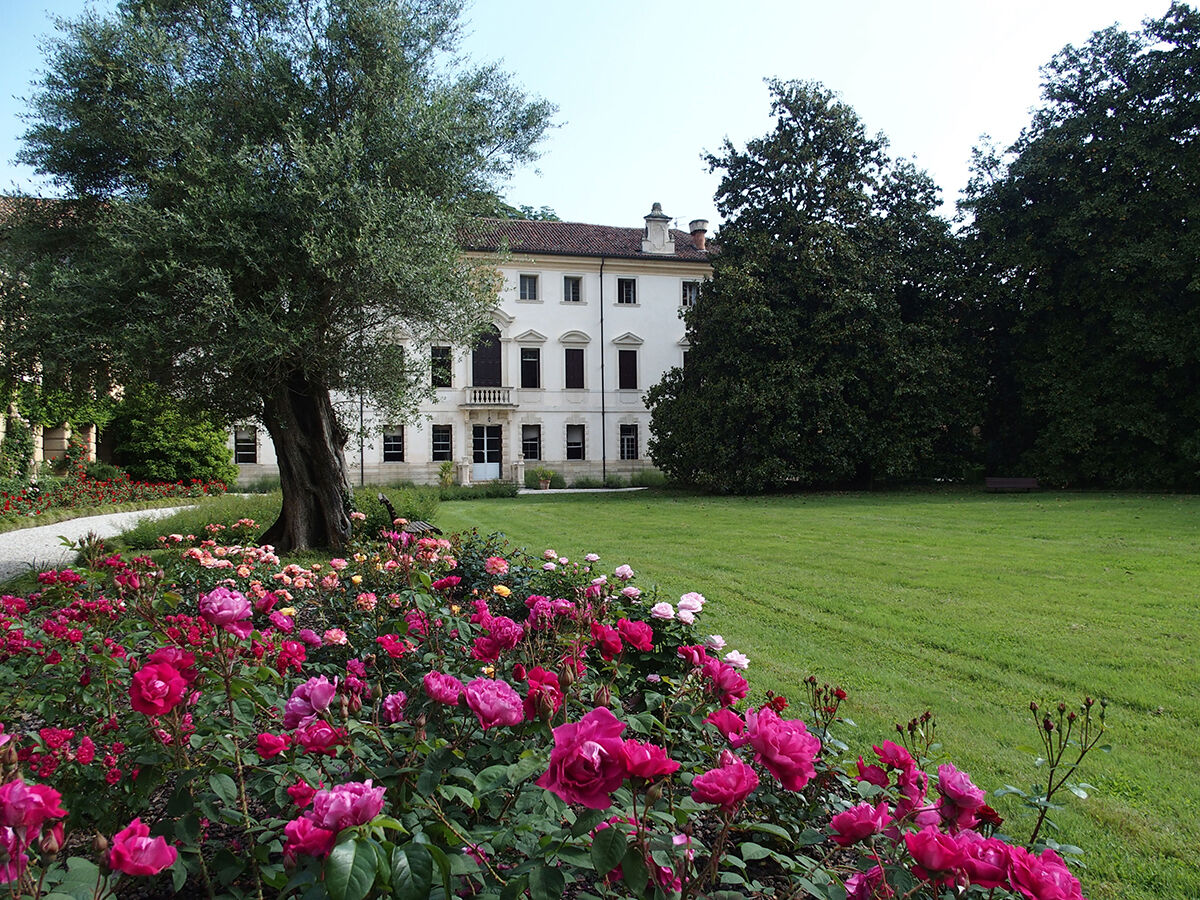
What is remarkable about the design of Zileri is how nature, in the sense of ancient forested hills, are connected to what can be described as a formal Italian garden inspired by the Romans. The architecture mediates the connection to the old-growth forest. Inside the buildings, the art of Tiepolo reflects upon humanity and the struggles of history. At no point does the placement of built objects become the center of attention; instead, they are the connecting element opening one’s eyes up to the forested Berici hills and the rugged peaks of the Dolomites framing the background. It is just magical and creates a sense of place that is unique.
In America, architecture is most often mediating strip malls interstates and building walls to separate haves from have-nots. There are no villa Zileris except behind gated wealthy communities like Palm Beach. Imagining architecture is art as an architect becomes the compromise between your passion and what enables you to pay your bills.
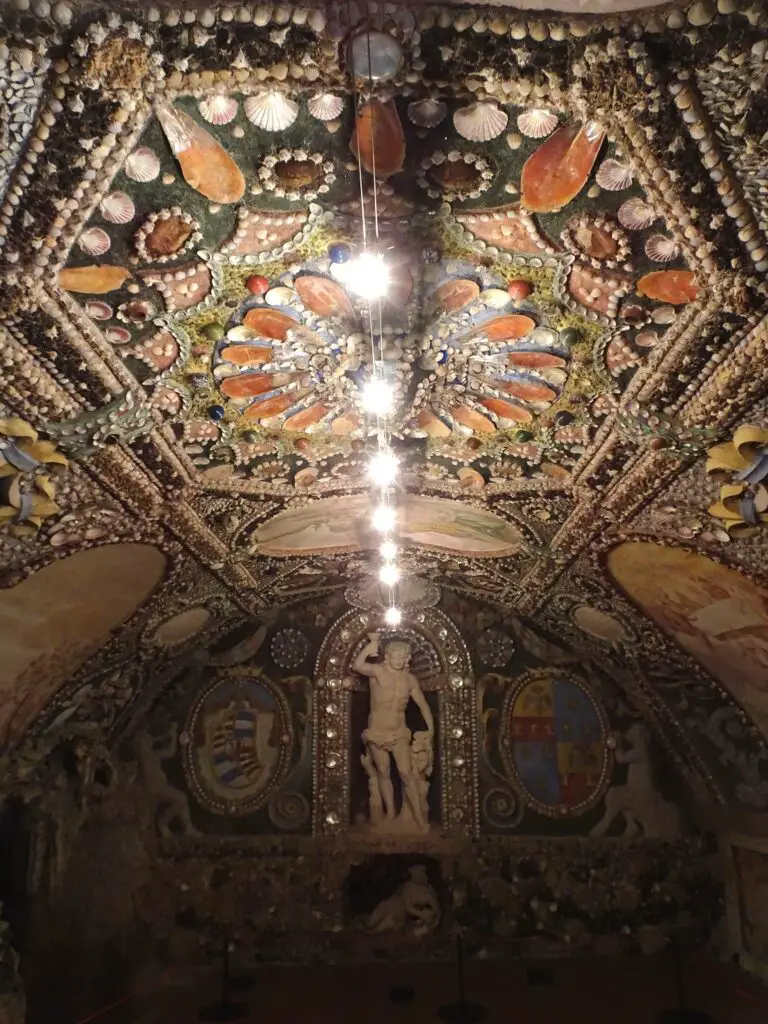
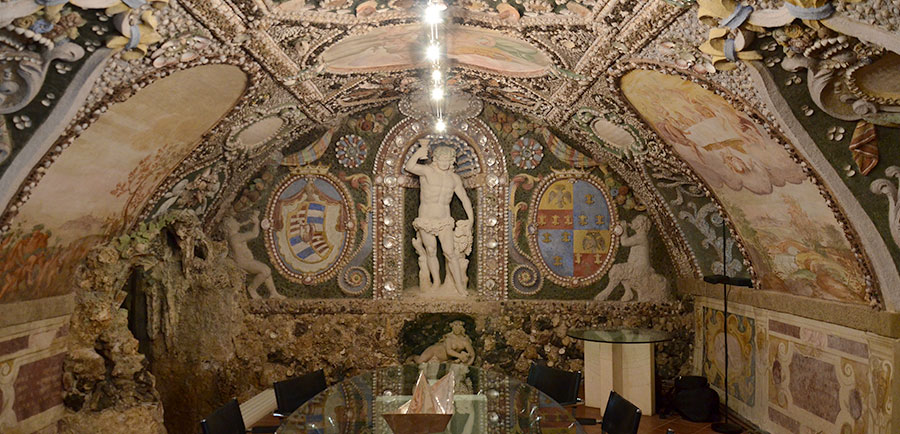
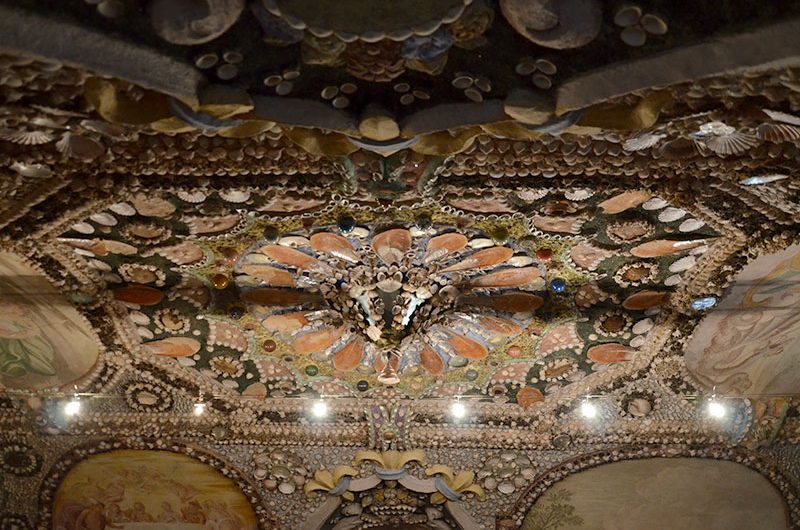
Views of the ceiling of the chapel decorated with sea shells
I would like to think that Zileri is unique in this landscape but it is not. There is a sensitivity to the contour of land and elements of craftsmanship that are in every small side street. This place has been character rich for generations. Streets were places where old and young mingled and retired men gathered. By contrast this is something offered only to the wealthy in America. Why I do not know but I do know from my childhood the effect efforts by people like Tiepolo, Muttoni and Palladio have on culture centuries later. For certain America has places that are nice and comparable but here they are primarily enabled by the rich and usually in communities reserved for the wealthy. Not for the public good and this has become a divisive cancer in the culture of the United States at the moment.
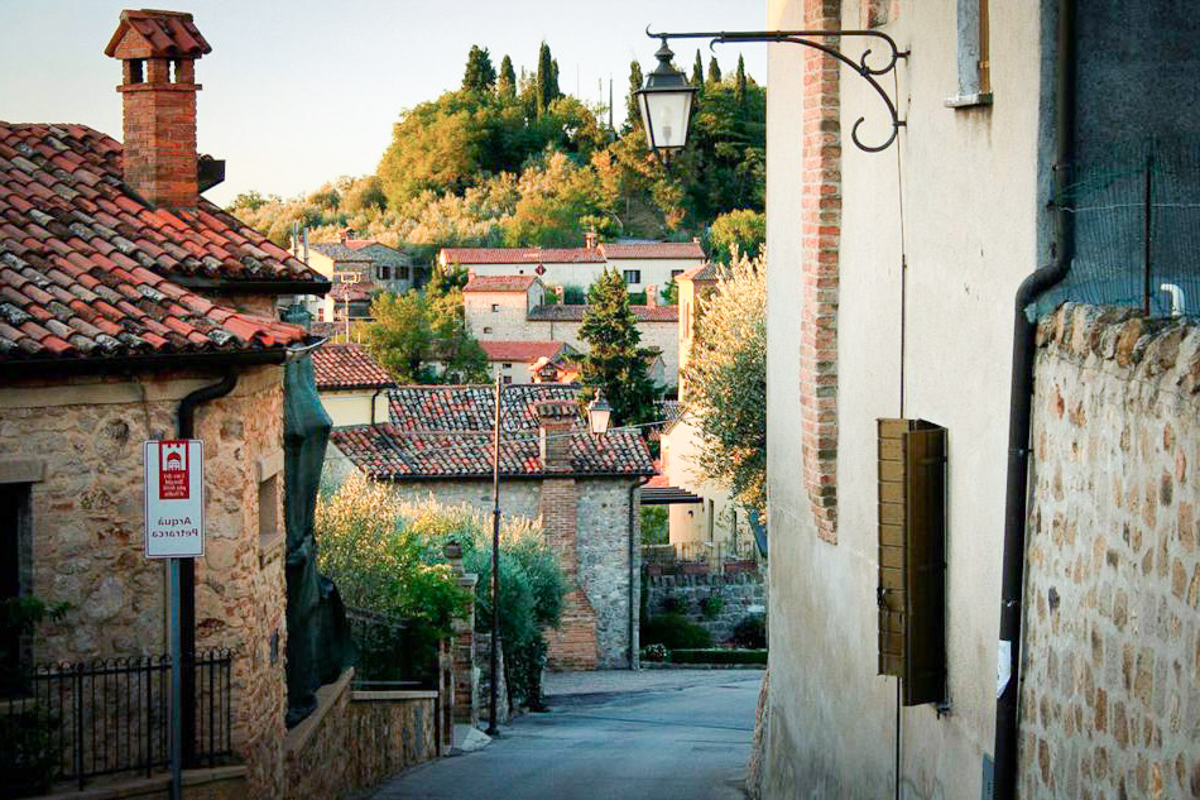
Typical street in Montiviale
At Auburn University, where I studied architecture, former professor Sambo Mockbee used to explain “architecture is not art; its only product is a decaying toxic material you “design” that contaminates soil, killing most microorganisms on the “site”—erasing whatever habitat was present for countless living beings. You’re a biodiversity serial killer, not an artist”. “The challenge is to become an artist”. Sadly Mockbee died before I was able to do my thesis.
Instead a professor who became my thesis advisor told me the idea of doing a year long study on villa Zileri and the movement in architecture of the Veneto region that shaped it was not something she would approve. “No one is interested in Italian villas, everything about that has been written”. I had suddenly experienced first hand a certain type of ignorance of those who viewed America as sitting on top of an evolutionary path of design. The idea that something was touched upon by a group of 15th century architects believing in connecting nature and form through function that developed a cult-like following among Venetian merchants in 15th century Italy was unworthy of graduate study was a waste of time is ignorant. I told her what’s not printable and this led ultimately to Jack Williams as my thesis advisor who taught me how to question the rural south’s urban form and racism’s role in architecture and planning in a manner I would have never discovered on my own.
A rare moment where I had to go along to get along but it proved to be in my own best interest. As a result I would never quit asking questions about the southern landscape nor documenting it. But I never stopped wondering about Muttoni and Marchi’s ideas and a little chapel at the top of a hill I used to climb in northern Italy.
But I will go back to villa Zileri, this time with camera and sketchbook in hand. And as I begin the next chapter of life, look up my old friend Paolo and do the thesis I should have done in the first place.